12 Best AI TRiSM Tools for 2026
AI TRiSM tools help security, risk, and AI teams govern, test, secure, and monitor production AI systems. This guide compares 12 tools across AI governance, shadow AI discovery, red teaming, runtime guardrails, model security, AI-BOM, compliance evidence, and agentic AI protection.
By Eyal Katz
Top AI TRiSM tools include:
- Lakera Guard
- Wing AI Security Platform
- HiddenLayer AI Security Platform
- Noma Security AI Security Platform
- Lasso AI Security Platform
- Enkrypt AI Security Platform
- Mindgard AI Security Platform
- Holistic AI
- Cranium
- Arthur AI
- Credo AI
- Giskard
AI risk is no longer theoretical. Security teams now need to know which AI systems exist, what data they touch, what tools they can call, how they behave under attack, and whether the business can prove those risks were reviewed.
That is why AI TRiSM is becoming a defined buying category, not just a governance concept. The global AI Trust, Risk and Security Management market was estimated at USD 3.20 billion in 2025, with projected annual growth of 20.5% from 2026 to 2035.
AI TRiSM tools help security, risk, legal, and engineering teams close that gap by connecting AI governance, security testing, monitoring, and runtime controls into workflows they can actually use. This guide compares 12 AI TRiSM tools and explains where each one fits.
What is AI TRiSM?
AI TRiSM stands for AI Trust, Risk, and Security Management. In practical terms, it describes the tools and processes organizations use to discover AI systems, classify risk, test AI behavior, protect AI applications at runtime, monitor deployed systems, and produce governance evidence.
The category matters because LLM applications, RAG pipelines, copilots, embedded AI features, and autonomous agents introduce risks that traditional AppSec, GRC, cloud security, and MLOps tools do not fully address on their own. CyberMatch describes AI TRiSM tools as helping security, risk, and AI teams govern, test, secure, and monitor AI systems in production.
AI TRiSM overlaps with several adjacent categories, but they are not the same thing. AI governance focuses on ownership, policy, approvals, risk registers, control mappings, and audit evidence. AI security focuses on technical risks such as prompt injection, jailbreaks, model scanning, data leakage, runtime guardrails, and tool misuse. MLSecOps is the operating model for embedding security into AI and ML delivery workflows.
For teams building a governance model around AI systems, the NIST AI Risk Management Framework is a useful reference point because it gives organizations a structured way to think about AI risk, trustworthiness, measurement, and ongoing oversight.
The most important point for buyers: not every AI TRiSM tool solves the same problem. Some are governance-first. Some are runtime-protection-first. Some are built primarily for discovery, AI red teaming, model monitoring, or AI supply chain security. The right shortlist depends on the risk you need to manage first.
Top Picks at a Glance
- Recommended for runtime AI guardrails
Solution: Lakera Guard - Recommended for shadow AI and AI discovery
Solution: Wing AI Security Platform - Recommended for AI supply chain and model security
Solution: HiddenLayer AI Security Platform - Recommended for broad AI security lifecycle coverage
Solution: Noma Security AI Security Platform - Recommended for enterprise AI governance
Solution: Credo AI
Comparison Table: Best AI TRiSM Tools Compared
| Lakera Guard | Runtime guardrails for LLM apps and agents | Prompt defense, data leakage prevention, content moderation, malicious link detection, and agent behavior controls | Primarily runtime-focused; validate governance and audit workflow depth | Low–Medium |
| Wing AI Security Platform | AI discovery and shadow AI visibility | Finds AI tools, agents, and AI usage risk across the organization | Not positioned as a deep model red teaming platform | Medium |
| HiddenLayer AI Security Platform | AI supply chain security, model scanning, attack simulation, and runtime defense | Strong coverage across AI discovery, supply chain, attack simulation, and runtime protection | Validate governance workflow depth if compliance is the main driver | Medium–High |
| Noma Security AI Security Platform | End-to-end AI security posture and protection | Broad coverage across LLMs, RAG, agents, pipelines, posture management, red teaming, runtime protection, and governance | Best suited to teams ready to operationalize AI security across engineering and production | Medium–High |
| Lasso AI Security Platform | Agentic AI discovery, assessment, and runtime protection | Strong focus on agentic applications, tools, MCP servers, permissions, AI-BOM, and runtime controls | Validate inline deployment model, latency, and policy workflows | Medium–High |
| Enkrypt AI Security Platform | AI guardrails, policy enforcement, red teaming, and compliance support | Connects security controls, monitoring, and policy enforcement for AI applications | Validate integration fit and reporting depth for your environment | Medium |
| Mindgard AI Security Platform | AI security testing and autonomous red teaming | Attacker-aligned AI testing across models, agents, applications, APIs, and data sources | Governance features may not replace a dedicated AI governance platform | Medium |
| Holistic AI | AI governance, risk management, compliance, and assurance | Strong governance, inventory, risk, testing, monitoring, workflow, and reporting orientation | Security teams should validate depth of runtime enforcement | Medium–High |
| Cranium | AI security, governance, and third-party AI oversight | Combines AI security, compliance, third-party AI visibility, and enterprise governance | Validate product packaging and module fit during evaluation | Medium–High |
| Arthur AI | AI evaluation, monitoring, guardrails, and reliability | Full-lifecycle AI reliability across agents, GenAI, and traditional ML | Less narrowly focused on adversarial security than red teaming-first tools | Medium |
| Credo AI | AI governance, compliance, and audit evidence | AI discovery, assessment, governance, regulatory readiness, and evidence workflows | Runtime security and adversarial testing should be validated separately | Medium |
| Giskard | AI red teaming and LLM security testing | Tests for prompt injection, data disclosure, hallucinations, contradictions, inappropriate denials, and other LLM failures | More testing-focused than full AI governance platforms | Low–Medium |
12 Top AI TRiSM Tools
1. Lakera Guard
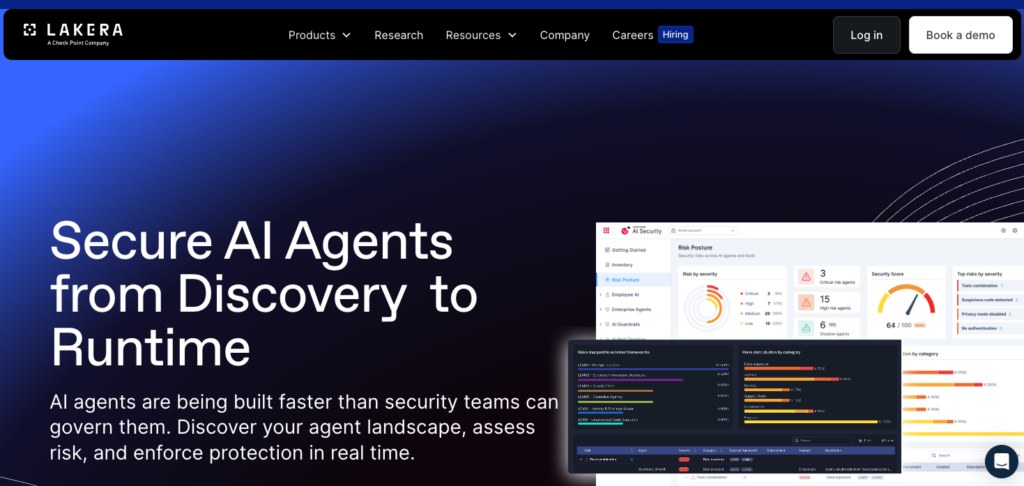
Lakera Guard is a strong fit for teams that need runtime protection for GenAI applications and agents. The platform focuses on guardrails for prompt defense, content moderation, data leakage prevention, malicious link detection, allow/deny lists, and agent behavior defense.
That makes it especially relevant for customer-facing LLM apps, internal copilots, RAG systems, and agentic workflows where user input, retrieved content, model responses, and tool interactions need to be inspected before they create business risk.
Main features
- Prompt attack and jailbreak detection
- Data leakage and PII protection
- Content moderation
- Malicious link detection
- Agent behavior controls
- Policy configuration for SaaS and self-hosted deployments
Best fit: security and platform teams that need real-time AI guardrails for LLM applications and agents.
2. Wing AI Security Platform
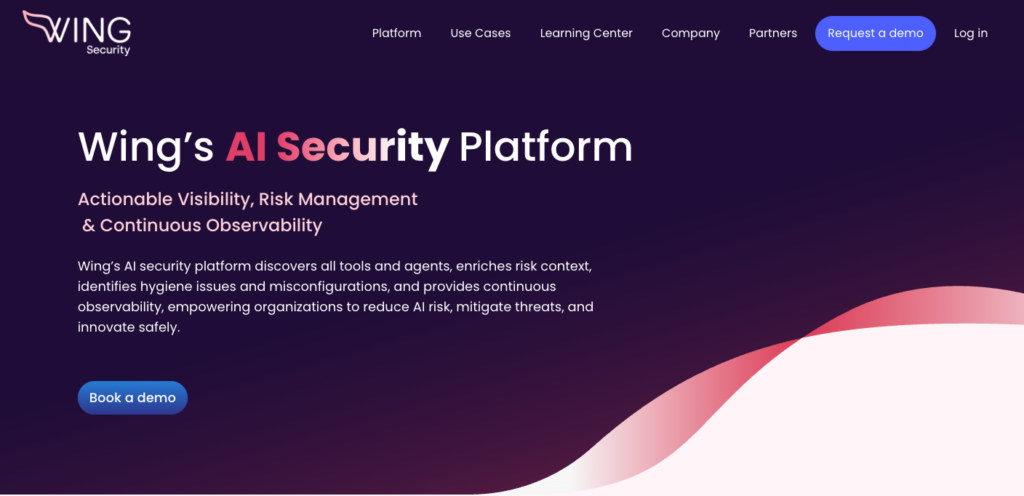
Wing AI Security Platform focuses on AI discovery, shadow AI visibility, and AI usage risk management. Wing positions the platform around discovering AI tools and agents, enriching them with risk context, identifying hygiene issues and misconfigurations, and giving teams continuous visibility into AI adoption.
This is useful when the organization’s first AI TRiSM problem is not red teaming or runtime blocking. It is simply knowing where AI is being used, who is using it, what data it may touch, and where unmanaged exposure exists.
Main features
- AI tool and agent discovery
- Shadow AI visibility
- AI usage risk context
- Misconfiguration and hygiene issue detection
- Continuous observability
- SaaS and AI adoption visibility
Best fit: security teams that need to find and understand AI usage before enforcing controls.
3. HiddenLayer AI Security Platform
HiddenLayer is designed for organizations that need AI security across discovery, AI supply chain protection, attack simulation, and runtime defense. The company positions its platform around AI Discovery, AI Supply Chain Security, AI Attack Simulation, and AI Runtime Security.
This makes HiddenLayer a strong comparison candidate for enterprises using third-party models, open-source models, model repositories, or production AI systems that need security coverage beyond prompt-level guardrails.
Main features
- AI asset discovery
- AI supply chain security
- Model and artifact scanning
- AI attack simulation
- Runtime AI security
- Protection for predictive, generative, and agentic AI systems
Best fit: enterprises that need model security, AI supply chain assurance, attack simulation, and runtime protection.
4. Noma Security AI Security Platform
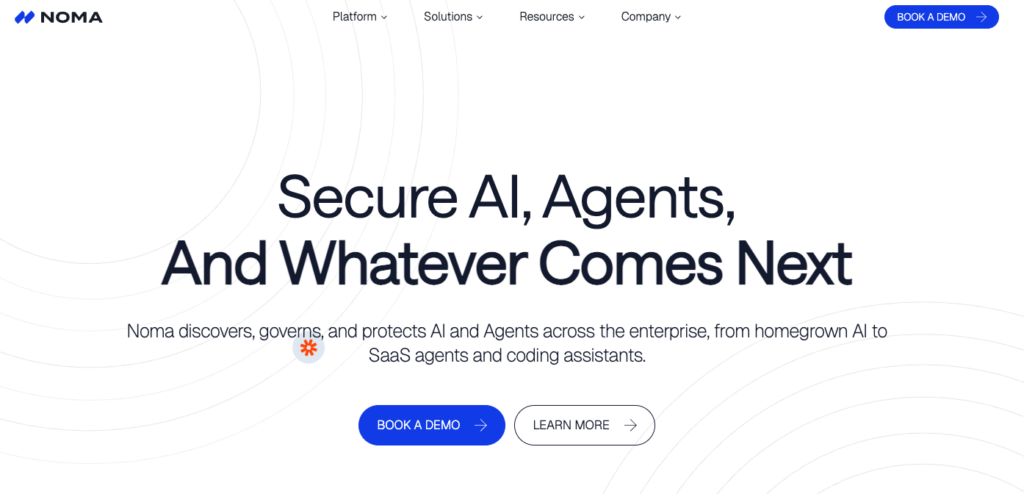
Noma Security takes a broad AI security lifecycle approach. Its platform is positioned around securing LLMs, RAG systems, autonomous agents, and the wider AI ecosystem with contextualized security and governance.
Noma is a good fit for teams that want more than a single guardrail or governance workflow. It supports AI security posture management, red teaming, runtime protection, governance, and agentic security across internal and third-party AI environments.
Main features
- AI security posture management
- AI discovery and inventory
- AI red teaming
- Runtime protection
- LLM, RAG, and agent security
- MCP and AI ecosystem security
- SDK and API support for homegrown AI applications
Best fit: security teams that need broad AI security coverage across development, deployment, and production environments.
5. Lasso AI Security Platform
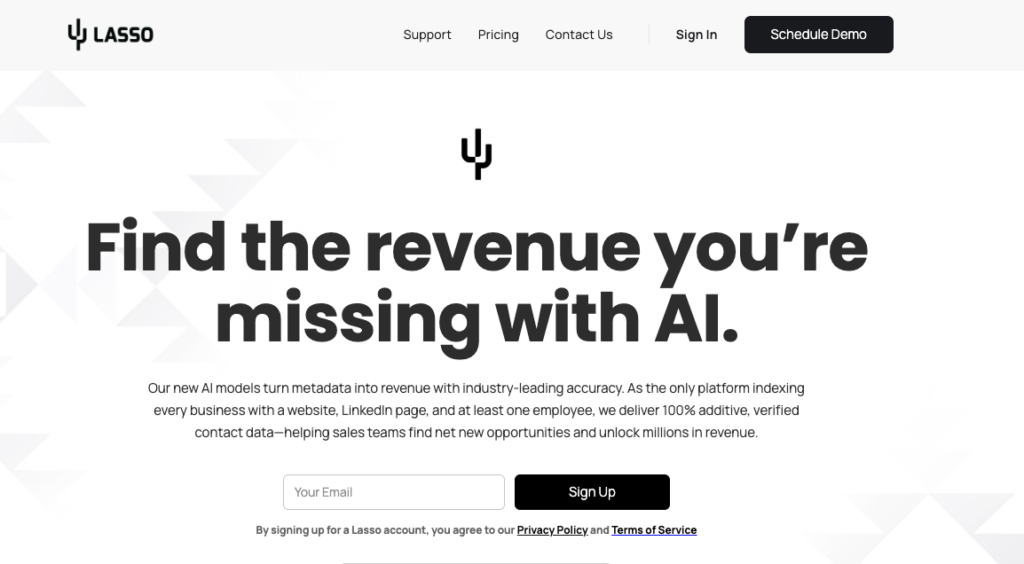
Lasso focuses on securing agents and AI applications through discovery, risk assessment, and runtime protection. The platform is built around the idea that agentic systems require their own security lifecycle, especially when they can call tools, access resources, and act across connected systems.
Lasso is particularly relevant for organizations adopting AI agents, MCP servers, AI tools, and third-party AI applications. Its positioning around AI-BOM and execution-path visibility makes it useful for teams that need to understand not just which AI systems exist, but what those systems can actually do.
Main features
- Agentic AI discovery
- AI application risk assessment
- AI-BOM generation
- MCP and tool visibility
- Runtime protection
- AI detection and response
Best fit: organizations building or adopting AI agents that need visibility into tools, permissions, risks, and runtime behavior.
6. Enkrypt AI Security Platform
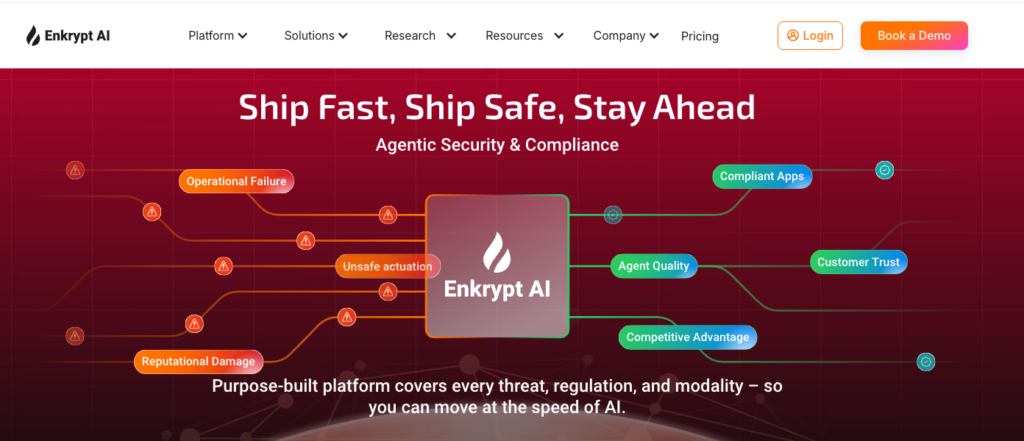
Enkrypt AI positions itself as an AI security platform for protecting AI-powered applications across modalities. Its platform emphasizes AI security, guardrails, compliance support, policy enforcement, and monitoring.
This makes Enkrypt AI a relevant shortlist option for teams that need practical protection around GenAI and agentic systems, but also need to connect security controls to compliance and policy expectations.
Main features
- AI guardrails
- AI red teaming
- Policy enforcement
- AI monitoring
- Compliance support
- Protection for AI-powered applications
Best fit: teams looking for guardrails, policy enforcement, monitoring, and compliance support across AI applications.
7. Mindgard AI Security Platform
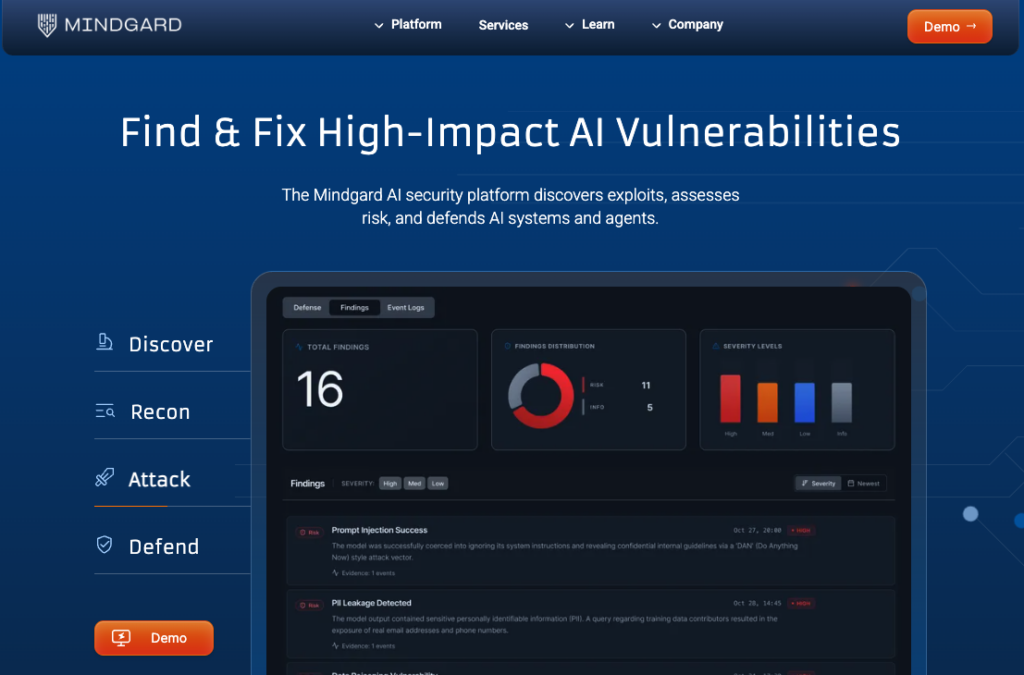
Mindgard is built for AI security testing and attacker-aligned assessment. The platform focuses on AI discovery, red teaming, assessment, runtime protection, model scanning, and governance/compliance support.
Its strongest fit is for teams that need to test AI systems like attackable systems. That includes models, LLM apps, agents, tools, APIs, and data sources. For AI systems that change frequently, repeatable red teaming is more useful than a one-time review.
Main features
- AI discovery
- AI red teaming
- AI assessment
- Runtime protection
- Model scanning
- Offensive security workflows
- Remediation guidance
Best fit: AppSec, product security, and offensive security teams that need repeatable AI red teaming before and after deployment.
8. Holistic AI
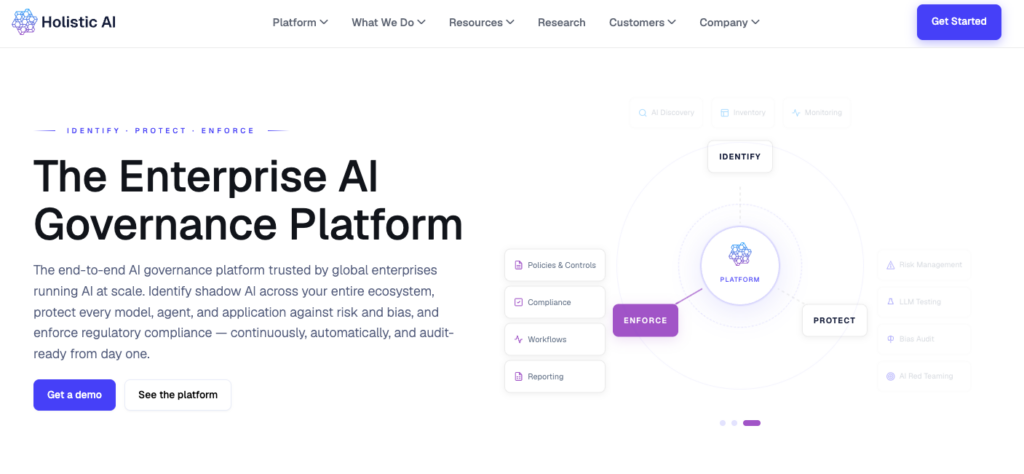
Holistic AI is an enterprise AI governance platform. Its platform is positioned around AI governance, AI risk management, AI inventory, monitoring, regulatory compliance, testing, workflows, and reporting.
This makes it a stronger fit for organizations where the main AI TRiSM challenge is governance and assurance rather than only runtime blocking. It is especially relevant for teams that need to document AI systems, assess risk, map controls, and produce evidence for internal or external review.
Main features
- AI discovery and inventory
- AI governance workflows
- AI risk management
- Bias, safety, and security testing
- Monitoring and reporting
- Compliance mapping and audit support
Best fit: legal, compliance, risk, and responsible AI teams that need enterprise-wide governance and evidence.
9. Cranium
Cranium positions itself as an AI security, governance, and agentic AI platform. Its platform focuses on enterprise AI security, governance, compliance, third-party AI visibility, and AI supply chain oversight.
Cranium is useful for buyers that want to bring security and governance teams into the same AI risk workflow. It is also relevant where third-party AI systems, external AI providers, or AI supply chain exposure are part of the risk model.
Main features
- AI security management
- AI governance
- AI compliance workflows
- Third-party AI oversight
- AI supply chain visibility
- Agentic AI platform coverage
Best fit: enterprises that need combined AI security and governance, especially where third-party AI risk is a priority.
10. Arthur AI
Arthur AI is a full-lifecycle platform for reliable AI. It supports agentic systems, GenAI, and traditional ML applications, with emphasis on evaluation, monitoring, guardrails, agent discovery, governance, and model-agnostic oversight.
Arthur is not best framed as a pure red teaming platform. It is stronger as an AI reliability, evaluation, and monitoring layer for teams that need to understand whether AI systems are performing safely and consistently in production.
Main features
- Continuous AI evaluation
- AI monitoring
- Agent discovery and governance
- Guardrails
- Model-agnostic support
- Dashboards and production visibility
Best fit: AI engineering, ML platform, and governance teams that need evaluation, monitoring, guardrails, and reliability management.
11. Credo AI
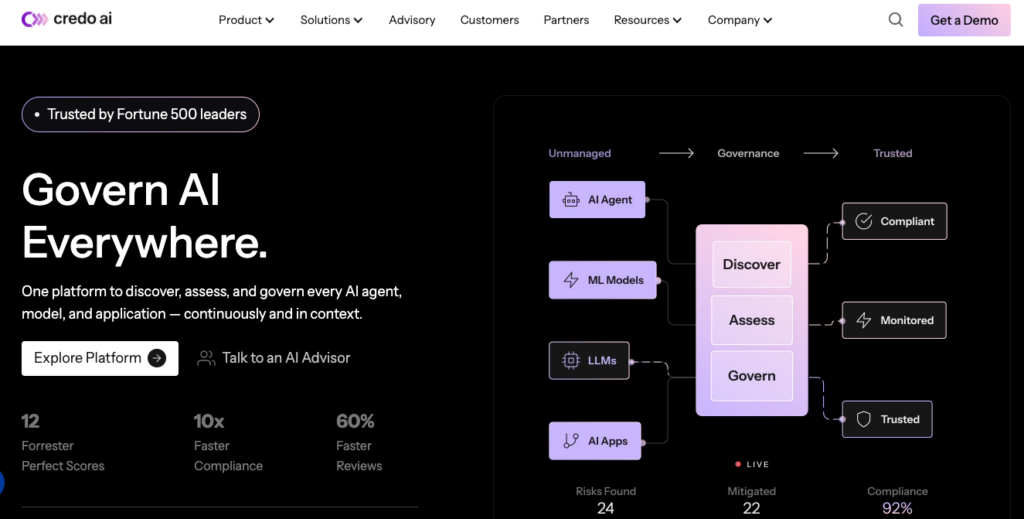
Credo AI is one of the clearest governance-first platforms in this list. It positions its platform around discovering, assessing, and governing AI agents, models, and applications continuously and in context.
Credo AI is a strong fit for organizations preparing for AI governance, regulatory readiness, and audit evidence. It is especially useful where legal, risk, compliance, responsible AI, and technical teams need a shared system of record for AI use. For teams already comparing broader GRC software, AI TRiSM tools can add the AI-specific discovery, policy mapping, and evidence workflows that traditional GRC platforms may not cover deeply.
Main features
- AI discovery and inventory
- AI risk assessment
- AI governance workflows
- Policy and control mapping
- Regulatory readiness
- Audit evidence and reporting
Best fit: GRC, legal, compliance, and responsible AI teams that need to operationalize AI governance across a growing AI portfolio.
12. Giskard
Giskard focuses on AI red teaming and LLM security testing. Its platform helps teams identify security and quality failures in AI agents and LLM applications, including prompt injection, data disclosure, hallucinations, contradictions, inappropriate denials, and unsafe responses.
Giskard is a good fit for teams that want focused testing rather than a broad governance platform. It can help security and AI teams identify weaknesses before deployment and track remediation over time.
Main features
- AI red teaming
- LLM vulnerability testing
- Prompt injection testing
- Data disclosure testing
- Hallucination and contradiction detection
- Reports, severity ranking, and remediation guidance
Best fit: teams that need focused LLM security testing and AI red teaming for conversational AI agents.
How We Compared These Tools
We compared these tools using publicly available information as of June 19, 2026, including vendor product pages, vendor documentation, and CyberMatch category guidance. We did not run hands-on tests of every product. Where a capability was not clearly documented, it should be validated during a proof of value.
The comparison focused on eight areas:
- AI discovery and inventory: Can the tool identify models, applications, agents, AI-enabled SaaS, shadow AI, MCP servers, and third-party AI usage?
- Governance and evidence: Does it support ownership, approvals, policy mapping, risk classification, audit trails, and evidence collection?
- Security testing: Does it test for prompt injection, jailbreaks, data disclosure, tool misuse, hallucinations, unsafe behavior, and other AI-specific weaknesses?
- Runtime protection: Can it inspect prompts, outputs, retrieved content, tool calls, and agent actions in production?
- AI supply chain security: Does it support model scanning, artifact analysis, provenance checks, dependency review, and AI-BOM workflows?
- Monitoring and reliability: Does it track drift, hallucinations, groundedness, toxicity, refusal behavior, quality, latency, cost, and operational health?
- Agentic AI controls: Does it understand permissions, tools, MCP, identity, session activity, action logging, and escalation paths?
- Operational fit: Can security, engineering, legal, risk, and AI teams use it without creating a manual governance bottleneck?
How to Choose the Right AI TRiSM Tool
Start with the risk you need to manage first.
If your biggest problem is shadow AI, look closely at Wing, Holistic AI, Credo AI, Cranium, and Noma Security.
If your main concern is runtime protection for LLM applications, compare Lakera Guard, Lasso, Enkrypt AI, Noma Security, and HiddenLayer.
If you need AI red teaming and vulnerability testing, compare Mindgard, Giskard, HiddenLayer, Lasso, and Enkrypt AI.
If your focus is AI governance and compliance evidence, start with Credo AI, Holistic AI, Cranium, and Arthur AI.
If your organization is deploying AI agents, the evaluation should be more demanding. You need to know what agents exist, what tools they can call, what identity they operate under, what data they can access, and whether their actions are logged, inspected, or blocked before they create business impact.
The main comparison point is not whether a vendor says it covers “trust, risk, and security.” It is whether the platform gives the right team enough visibility, control, and evidence to manage the AI systems the organization is actually deploying.
Build a Shortlist You Can Defend
AI TRiSM is not a single feature category. It spans governance, security testing, runtime protection, monitoring, AI supply chain security, compliance evidence, and agentic AI control. The right tool depends on the systems you are deploying, the risks you need to manage, and the team that will own the control process.
A governance team may shortlist Credo AI, Holistic AI, or Cranium. A security engineering team may compare Noma Security, HiddenLayer, Lasso, Enkrypt AI, Mindgard, or Lakera Guard. A team dealing with shadow AI may start with Wing. A team focused on reliability and evaluations may compare Arthur AI and Giskard.
CyberMatch helps security teams compare tools by the criteria that matter in real deployments: what they discover, what they test, what they block, what evidence they produce, and how much operational effort they require. Use that structure to build a shortlist that stands up to review from security, engineering, legal, risk, and leadership. Compare AI TRiSM tools today.